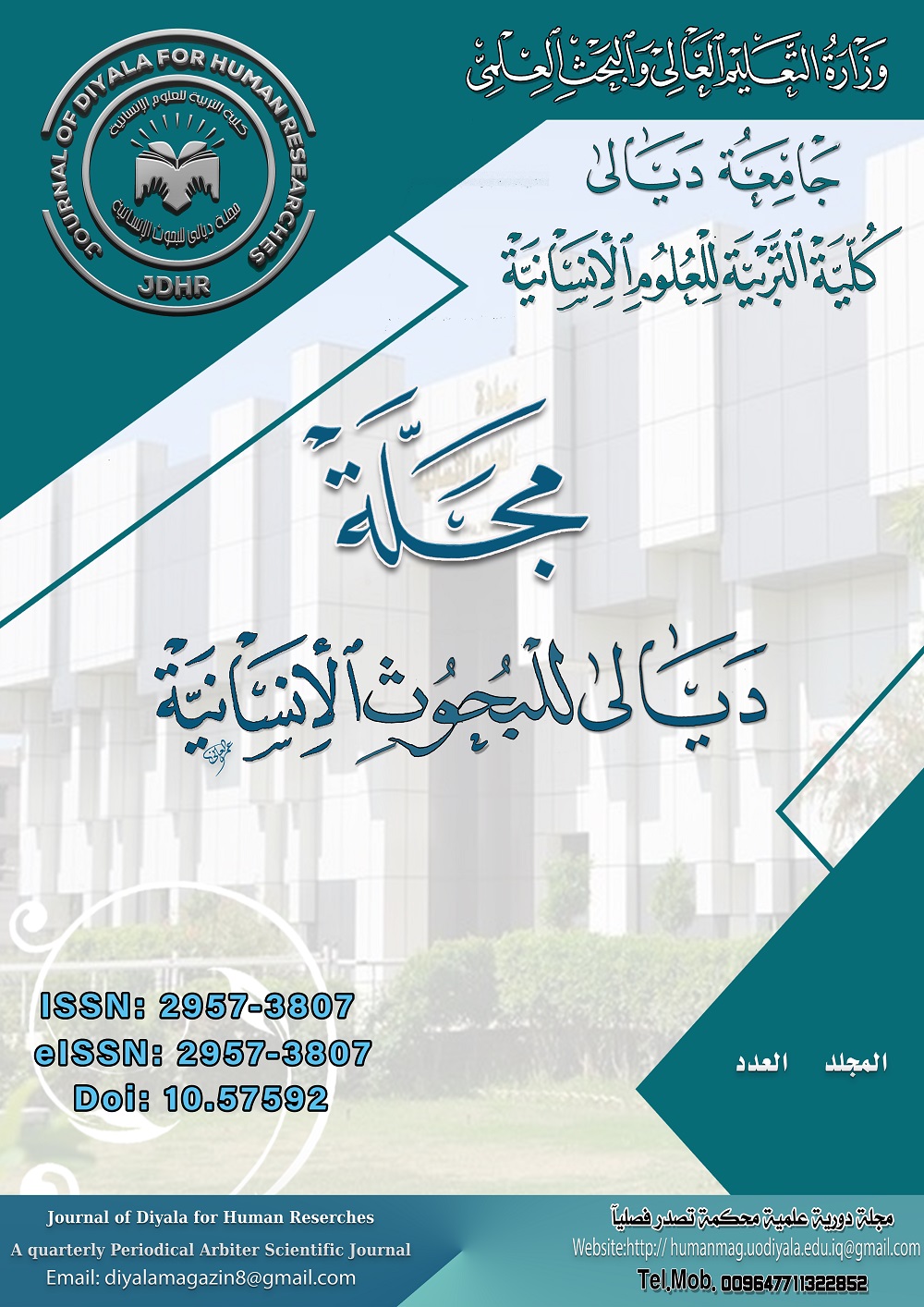
Semantic Functions of the Patterns of Quoted Verbs in Arabic Lexicons up to the End of the Fourth Century AH”
Authors

  • م.م. رونق سالم لطيف جامعة ديالى / كلية التربية للعلوم الإنسانية
  • أ.د. محمد بشير حسن جامعة ديالى / كلية التربية للعلوم الإنسانية

DOI:

https://doi.org/10.57592/q6q55w93

Abstract

This study addresses the phenomenon of morphological narrative as a prominent linguistic feature in classical Arabic linguistic corpora. It represents a means of demonstrating the diversity of verbal morphological patterns in terms of vocalization (fatḥ, ḍamm, kasr), and the semantic differences that result from them. The research relied on multiple verbal examples such as shaḥaba – shaḥba, safida – safada, ʿalina – ʿalana, and ahbaṭa – habaṭa, drawing on the views of prominent linguists such as al-Farrāʾ, Abū ʿUbayda, Ibn Durayd, Ibn al-Sikkīt, among others. The study highlighted that variation in vocalization within these verbs should not be considered anomalous; rather, it reflects attested dialectal usages documented by linguists through narrative citation, in order to portray the actual linguistic reality of the Arabs. The findings concluded that this type of narrative contributes to enriching the Arabic lexicon and broadening its semantic scope, while also revealing the nature of language as a living entity open to diversity and development. Furthermore, it serves as evidence of the precise descriptive methodology adopted by early Arab linguists in documenting the language.

Downloads

Published

2025-12-23

Issue

Section

بحـــــــوث العــــــدد